There’s a difference between a room that looks like it has a vintage theme and one that just feels warm, personal, and a little lived-in. One announces itself. The other puts you at ease without you even realizing it. The team at Middleton's Furniture and Appliance works with this distinction often — and the answer is almost always about specific furniture choices rather than a room-wide commitment to any particular era.
Curved Silhouettes and Softer Shapes
Some furniture just reads as “vintage” the moment it enters a room — and it usually has more to do with its shape than its finish or color. Curved silhouettes were the default in mid-century and earlier design, and they still carry that visual signature today without requiring any surrounding commitment to the style.
- Camelback and rolled-arm sofas: A sofa with a slightly arched back or gently rolled arms reads as vintage without being theatrical about it. These shapes contrast naturally with modern, straight-edged pieces and create visual interest without a full period commitment.
- Rounded dining chairs: Chairs with barrel backs, curved seat rails, or subtly tapered legs bring warmth to a dining room that sharp-cornered modern chairs typically don’t. They pair surprisingly well with contemporary tables.
- Arched headboards: An upholstered headboard with a curved or scalloped top is one of the simplest ways to add vintage character to a bedroom without touching anything else in the room.
Pro Tip:
Curves work best as one or two anchor pieces rather than on every item in the room. The contrast between curved and clean-lined furniture is part of what makes the combination feel more interesting than uniform.
Distressed Wood and Mixed Materials
Wood tone and finish are two of the most powerful tools in a vintage-inspired room — and they’re frequently overlooked in favor of more obvious choices like color or pattern. Getting the wood right does a lot of quiet work.
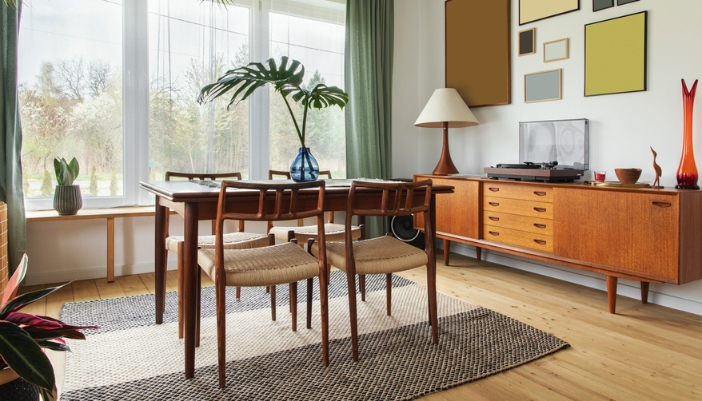
- Weathered and warm-toned finishes: Distressed oak, honey walnut, and painted wood in muted, slightly aged tones signal vintage without announcing it loudly. These finishes look as though the piece has been around long enough to have earned its place.
- Mixed materials within one piece: Vintage furniture often combines materials in ways that modern minimalist design avoids — wood with cane, metal with velvet, carved detailing with upholstered cushions. A few pieces that mix materials this way add a collected-over-time quality that’s hard to fake.
- Visible grain and natural variation: Furniture that shows wood grain, knots, or slight color variation reads as more personal and less mass-produced — which is exactly the feeling vintage-inspired spaces are working toward.
Tufted Upholstery and Ornate Details
Tufting is probably the most recognizable signature of vintage-inspired upholstery, and it still works as well today as it ever did. The key is treating it as an accent rather than a theme — one strong piece does more than a room full of it.
- Tufted sofas and chairs: A tufted sofa in a neutral fabric — cream, warm gray, dusty velvet — adds vintage character without the rest of the room needing to match it. Deep-button tufting has the most dramatic presence; channel tufting reads as more contemporary while keeping a similar warmth.
- Nail head trim: A row of nail head detail along the arms or base of a chair or sofa is a small detail that carries real weight. It’s the kind of finishing touch that isn’t noticed immediately, but that makes a piece feel more considered.
- Carved wood details: Dining tables, bed frames, and dressers with carved legs, turned spindles, or decorative molding bring ornate vintage character to larger pieces. Used on one or two pieces, carved details keep the room feeling layered rather than heavy.
Mixing Vintage-Inspired Pieces With Modern Ones
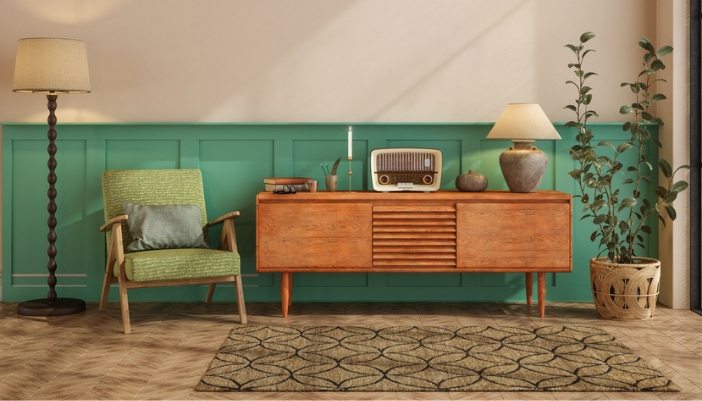
The goal isn’t a period room — it’s a room that feels like it was put together thoughtfully over time. The most successful vintage-inspired spaces mix eras, and that’s what keeps them from feeling costumed or overly committed to a single look.
- Lead with one anchor piece: Start with one strong vintage-inspired piece — a tufted sofa, a carved dining table, an arched headboard — and build around it. Introducing too many vintage signals at once tips the balance toward theme.
- Let surrounding pieces stay simple: When one piece is doing the vintage-inspired work, the furniture around it can afford to be cleaner and more contemporary. The contrast is what creates the collected-over-time feel rather than a matched set.
- Match wood tones loosely, not precisely: Vintage-inspired rooms don’t require all the wood to match. Keeping pieces within a similar warm or dark tone family — without matching exactly — looks intentional rather than accidental.
Warm, Not Museum-Ready
A vintage-inspired room should feel like somewhere you want to spend time — not something you’re tip-toeing around. If you’re working toward that feeling and want help finding the one or two anchor pieces that set the tone, stop in and ask our team at Middleton's Furniture and Appliance. We’re good at helping people get from “I like the idea” to a room that actually feels that way. Shop our furniture selection and see what you could add to your home today!